Water Damage Restoration Seattle

Sewage and Category 3 Water Cleanup Seattle

Category 3 water is defined by contamination, not volume. A two-inch toilet overflow that reached the wax ring can be Category 3, while a clean-supply-line burst covering a whole floor may only be Category 1. Sewage…

Get My Free Estimate →
Sewage and Category 3 Water Cleanup in Seattle, WA
Quick answer
  • What's included: black-water extraction, removal of contaminated carpet/pad/drywall, HEPA vacuuming, antimicrobial application, and structural drying of salvageable framing.
  • How fast: crews commonly reach Seattle addresses within 60, 90 minutes; extraction on the same visit, with drying running 3, 5 days.
  • What it costs: most Category 3 jobs run $2,500, $8,000 depending on affected square footage and how much porous material must be discarded.
  • What we remove: sewage-soaked carpet, pad, insulation, and drywall to at least 12 inches above the water line, plus any absorbed contents.
  • How to book: call the number on this page or text a photo of the affected area for a ballpark; exact price is confirmed on a free on-site inspection.

Category 3 water is defined by contamination, not volume. A two-inch toilet overflow that reached the wax ring can be Category 3, while a clean-supply-line burst covering a whole floor may only be Category 1. Sewage backups in Seattle frequently trace to root intrusion in older clay laterals common in Wallingford, Ravenna, and Mount Baker, or to combined sewer surcharge during heavy rain, when King County reports the system can back up into low-lying basements in Georgetown, South Park, and the Duwamish flats. Homes below the street grade along the Ship Canal and in parts of Ballard are the most exposed during winter storm surges.

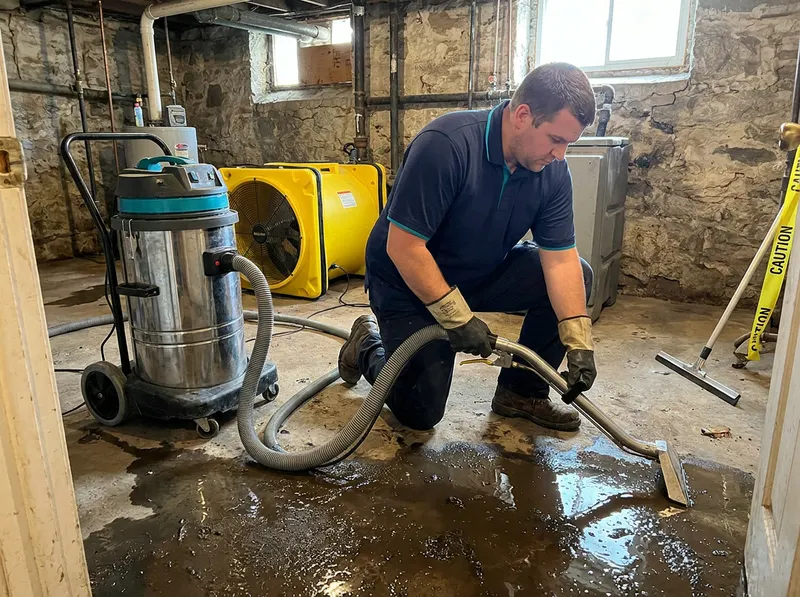
The cleanup follows a fixed sequence. First, crews extract standing black water with truck-mounted units. Second, all porous materials the water contacted, carpet, pad, fiberglass insulation, particleboard, and drywall cut to roughly 12, 18 inches above the water line, are bagged and disposed of as regulated waste, because IICRC S500 does not allow drying contaminated porous material in place. Third, the exposed framing and subfloor are HEPA-vacuumed and treated with an EPA-registered antimicrobial. Fourth, air movers and dehumidifiers run for 3, 5 days until moisture meters read below the dry standard for wood framing (typically under 16%). Fifth, the space is cleared for reconstruction.

Category 3 differs sharply from a clean-water dry-out, which is why it is priced and handled separately. If a supply line or ice-maker leaked clean water and it has been under 48 hours, in-place drying without demolition is usually appropriate. If the water is sewage, contains solids, or has sat long enough to grow bacteria, removal and disinfection are required, attempting to dry it in place risks lingering pathogens and mold. Older Seattle homes with knob-and-tube wiring or asbestos-containing floor tile add a step: affected materials may need testing before disposal, which can extend the timeline. A finished basement will cost more than an unfinished one because there is more porous material to cut out and replace.
Sewage and Category 3 Water Cleanup cost in Seattle

Single-room sewage backup (bathroom/laundry)$1,800, $3,500
Finished basement Category 3 flood$4,000, $8,000+
Contaminated material removal & disposal (per affected room)$600, $1,500
Antimicrobial treatment & HEPA cleaning$400, $1,200
Structural drying, 3, 5 days with equipment$1,000, $3,000

Every job gets a firm, written price after a free on-site visit.

Common questions

How fast can a crew reach a sewage backup in Seattle?
Crews commonly reach Seattle addresses within 60, 90 minutes for Category 3 emergencies. Extraction of standing sewage typically begins on that same visit, because standing black water spreads contamination and moisture the longer it sits.
Does insurance cover sewage cleanup in Seattle homes?
Many Seattle homeowners' policies cover sudden sewage backup only if a sewer/drain backup endorsement is on the policy, standard policies often exclude it. Documentation of the loss with moisture readings and photos is provided to support a claim, though coverage is decided by the insurer.
Why does drywall have to be removed after a sewage flood in Seattle?
Drywall is porous, so sewage-contaminated drywall is cut out to roughly 12, 18 inches above the water line rather than dried in place. IICRC S500 standards require removing porous Category 3 materials because bacteria and pathogens cannot be reliably disinfected within them, a common step in Seattle basement backups.
What causes most Category 3 backups in Seattle basements?
Most Category 3 backups in Seattle basements come from root intrusion in aging clay sewer laterals and combined-sewer surcharge during heavy rain. King County notes the combined system can back up into low-lying areas such as Georgetown, South Park, and the Duwamish flats during major storms.
How long does sewage cleanup and drying take in Seattle?
A typical Seattle sewage cleanup runs extraction and contaminated-material removal on day one, followed by 3, 5 days of structural drying. Drying continues until moisture meters read framing below the dry standard, usually under 16% for wood.

Get started today

Tell us about your sewage and category 3 water cleanup job in Seattle and we'll send a clear, written quote, usually the same day.

Get your free water damage restoration quote, Seattle

We only use your ZIP to check availability, no spam.