Reconstruction and Rebuild Seattle
Reconstruction follows mitigation, not the other way around. During water-damage cleanup, saturated drywall is cut to a set height (commonly 12 or 24 inches above the floor), soaked insulation is bagged out, and…
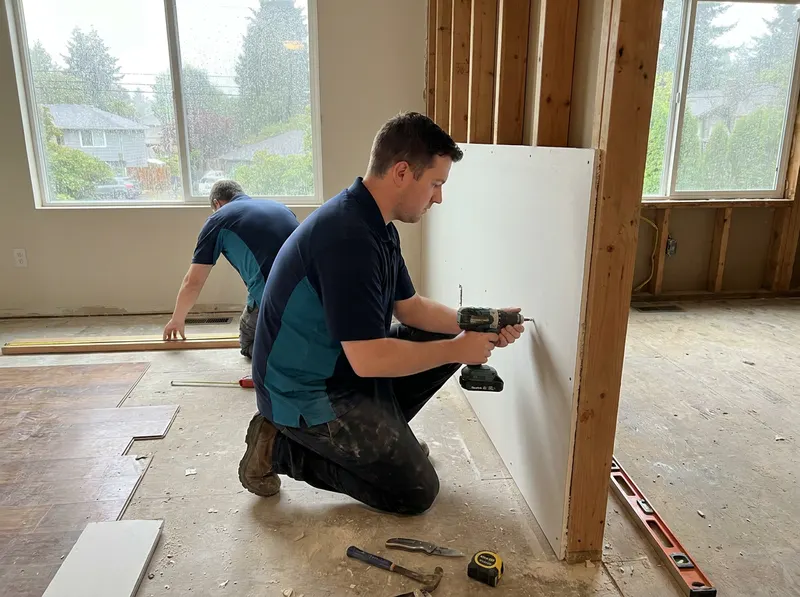
Reconstruction follows mitigation, not the other way around. During water-damage cleanup, saturated drywall is cut to a set height (commonly 12 or 24 inches above the floor), soaked insulation is bagged out, and…
Reconstruction follows mitigation, not the other way around. During water-damage cleanup, saturated drywall is cut to a set height (commonly 12 or 24 inches above the floor), soaked insulation is bagged out, and swollen flooring is pulled. Reconstruction closes that open cavity back up: new drywall is hung and taped, insulation is replaced to code, subfloor is patched or re-sheeted, flooring is laid, trim is reinstalled, and everything is primed and painted. Older Seattle housing stock changes the scope, Ballard and Wallingford bungalows often have original 1920s fir flooring and plaster-and-lath walls, so a rebuild may mean plaster patching or a fir refinish rather than a straight drywall swap.
A rebuild fits when demolition removed real material and the room can no longer be used as-is: a Green Lake basement where the bottom two feet of drywall came out, a Queen Anne kitchen where a supply line failed under the sink and the base cabinets delaminated, or a West Seattle bathroom where the subfloor rotted around the toilet flange. If the drying crew only pulled baseboard and dried the wall in place, no reconstruction is needed, a smaller repair covers it. The trade-off is scope: a same-height drywall patch and paint is fast and cheap, while a full flooring-and-cabinet rebuild carries material lead times and higher cost but restores the room completely.
The sequence is straightforward. First, moisture readings confirm the framing is dry to standard. Second, rough materials go in, insulation, drywall, subfloor. Third, finish work follows, flooring, trim, cabinets. Fourth, paint and fixtures complete the room, and final photos are logged. Permits enter the picture on larger jobs: the City of Seattle requires a construction permit for structural work, plumbing changes, or electrical alterations, though a like-for-like drywall-and-finish repair after water damage often falls under minor-repair thresholds. Older homes in Capitol Hill and the Central District built before 1978 also trigger EPA RRP lead-safe handling when painted plaster or trim is disturbed.
Lead times drive the timeline more than labor. Standard 1/2-inch drywall, batt insulation, and stock trim are on the shelf; custom cabinets, hardwood matched to an existing 1920s floor, or specialty tile can add one to four weeks. Seattle's damp winters also mean framing sometimes needs an extra day or two of drying before drywall can safely close the wall, sealing wet framing behind new drywall is the most common cause of a repeat mold problem.
Every job gets a firm, written price after a free on-site visit.
Tell us about your reconstruction and rebuild job in Seattle and we'll send a clear, written quote, usually the same day.