
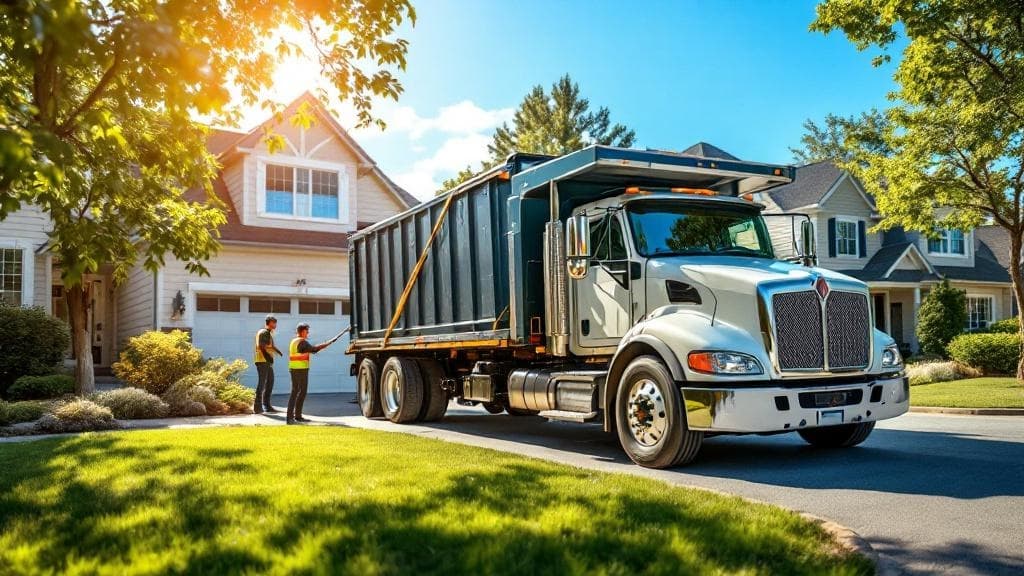
A roll-off dumpster rental is straightforward once you understand the basics: delivery + rental period + pickup + disposal. You choose a size (10-40 yard), pick a placement location (driveway or street), fill it following the rules, and the company hauls it away when you're done.
Step 1: Choose Your Dumpster Size
Most companies offer 10, 15, 20, 30, and 40-yard dumpsters. The "yard" refers to cubic yards of capacity.
- 10-15 yard: Small cleanouts, bathroom remodels, yard debris
- 20 yard: Most popular — garage cleanouts, medium renovations, roofing
- 30 yard: Large cleanouts, major renovations, estate cleanouts
- 40 yard: Construction sites, commercial jobs, demolition
Not sure which size you need? Check out our complete dumpster sizes guide with dimensions and project examples.
Pro tip: When in doubt, size up. A second haul is usually more expensive than the price difference between sizes.
Step 2: Decide Where the Dumpster Will Go
Driveway placement is the most common and usually easiest:
- No permit required in most areas
- Convenient access to your home
- Ask about plywood boards to protect the driveway surface
Street placement may be necessary if:
- Your driveway is too small or inaccessible
- You need the driveway for vehicles
- The project requires closer access (roofing, for example)
Before booking, ask these questions:
- "Do I need a permit for street placement?"
- "Do you provide boards to protect my driveway?"
- "How much clearance does the truck need for delivery?"
Step 3: Know What You Can (and Can't) Throw Away
Most haulers accept:
- Household junk, furniture, general trash
- Wood, drywall, flooring, carpet, tile
- Construction debris (lumber, siding, etc.)
- Roofing shingles (but they're heavy — watch the weight limit)
- Yard waste (branches, leaves, soil in some areas)
Commonly prohibited items:
- Paint, solvents, chemicals, motor oil
- Tires, car batteries
- Electronics (TVs, computers — varies by area)
- Appliances with refrigerants (fridges, AC units)
- Propane tanks, fire extinguishers
- Medical waste, asbestos
Note: Putting prohibited items in the dumpster can result in contamination fees ranging from $50-500+.
Step 4: Understand the Rental Period
Most rentals include 7-14 days, but this varies by company. Some key questions:
- "How many days are included in the base price?"
- "What's the daily fee for keeping it longer?" (Usually $10-25/day)
- "Can I call for early pickup if I finish sooner?"
Pro tip: Book enough days upfront. Extension fees can add up, and scheduling conflicts during busy seasons may delay pickup.
Step 5: Confirm the Weight Allowance
Every rental includes a weight limit (measured in tons). Exceeding it means overage fees.
Typical weight limits:
- 10-yard: 2-3 tons
- 20-yard: 3-4 tons
- 30-yard: 4-5 tons
- 40-yard: 5-6 tons
Heavy materials to watch:
- Concrete, brick, stone, dirt
- Asphalt roofing shingles
- Wet debris (rain-soaked materials)
Learn more about dumpster rental costs and fees including how weight overages are calculated.
Step 6: Prepare for Delivery Day
Before the truck arrives:
- Clear vehicles from the driveway
- Remove obstacles (bikes, trash cans, basketball hoops)
- Mark the exact spot where you want the dumpster
- Check overhead clearance (branches, power lines)
- Ensure the truck has room to maneuver (typically needs 50-60 feet)
Note: If the truck can't access the location, you may be charged a "dry run" or trip fee.
Step 7: Follow the Loading Rules
To avoid problems at pickup and extra fees:
- Keep it level: Debris must not exceed the top rim of the dumpster
- Distribute weight evenly: Don't pile everything on one side
- No prohibited items: They'll be removed and you'll be charged
- Break down large items: Furniture, boxes, etc.
Overfilled dumpsters may be refused for pickup or charged an overfill fee.
Step 8: Schedule Pickup
When you're done loading:
- Call or go online to schedule pickup
- Make sure the truck can access the dumpster
- Remove any vehicles or obstacles
The company will haul the dumpster to a transfer station or landfill, weigh it, and finalize your charges.
Common Dumpster Rental Fees
- Overweight fees: $50-100+ per ton over the limit
- Extra day fees: $10-25 per day beyond the rental period
- Trip/dry run fees: $50-100+ if the truck can't access the dumpster
- Contamination fees: $50-500+ for prohibited items
- Overfill fees: $50-100+ if debris exceeds the rim
Frequently Asked Questions
About RentADumpsterGuide.com
We help homeowners and contractors find the right dumpster rental for their projects. Our free comparison tool connects you with local haulers, so you can compare sizes, pricing, and availability — all in one place.
Continue Reading
Project Guides
Find the right dumpster size for your specific project: